Living and Learning with GAMT
After Jade was born in 1987, our family underwent major changes while working with early intervention therapists and searching for answers, all within efforts to maintain equilibrium in our lives. The phrase “Happy Jade, happy life” soon replaced the traditional adage, “Happy wife, happy life.”
We observed that Jade was missing key developmental milestones—such as feeding difficulties, frequent clenched fists, and issues with neck strength. After consultations with specialists and undergoing multiple tests, she was diagnosed with Global Delayed Development, though a definitive cause remained elusive. Subsequently, Jade developed seizures which were managed with medication. With the increase of seizures, decline in balance and confidence in walking without holding on to support led us to further genetic testing conducted in 2015 and 2016 identified Guanidinoacetate methyltransferase (GAMT) deficiency, a rare metabolic disorder impairing creatine production. Targeted treatment with creatine promptly ceased her seizures and her balance returned to our amazement. Based on recommendations from the USA ACD CCDS first symposium, L-Ornithine was incorporated to further reduce GAA toxicity. Since implementing this intervention, along with dietary modifications that lowered Protein/Arginine and Glycine intake, Jade has made notable progress in building skills in daily activities, with repetitive learning and leading to greater autonomy and enhanced inclusion.
As parents, we encountered a range of emotions upon learning that Jade’s GAMT deficiency was only recognized years after her birth. Both medical and disability sectors continue to face challenges due to delays in information dissemination, and awareness of newborn screening remains insufficient. We often reflect on whether earlier access to information and timely diagnosis could have improved Jade’s communication skills. Despite ongoing uncertainties, we are profoundly grateful to researchers who discovered GAMT and continue to advance options. The Association for Creatine Deficiency, begun with a few USA mums to now committed and extensive outreach efforts globally. Which has benefited Jade and our family and families with CCDS, more than words can say.
Jade sustained brain damage resulting from untreated GAA toxicity. Adjusting to life with disabilities has altered our family dynamics and reshaped expectations for our daughters’ futures. Sibling relationships became imbalanced, as Jade’s sister yearned for reciprocal communication and companionship, occasionally joking, “At least Jade can’t tell on me.” While challenges remain, the importance of balance became evident. Therapy and respite services provided unexpected advantages for Jade, who flourishes in active environments and approaches each day with enthusiasm. Families supporting loved ones recognize the critical need for contingency planning to uphold stability during difficult times, which helps not consistently being in flight mode.
Over time, we have learned to view certain behaviours with humour; for instance, Jade once audibly expressed joy at a theatre show, momentarily overshadowing the singer. Although reactions at the time were mixed, these memories now bring laughter. On another occasion during a flight, Jade excitedly tapped the headrests of those seated in front of her and stamped her feet, there is only so many snacks one can offer for a little quietness. While progress continues, Jade seldom disturbs fellow passengers and is content to look out the window on shorter flights.
Jade continues to struggle with self-regulation and expressive communication due to her lack of speech, resorting to vocalization as her primary outlet. Improvements have been observed since treatment; she now has patience in bank or shopping cue’s and is learning more communication methods such as key word signing, visuals on iPad. Today, Jade is a confident young individual who actively contributes, enjoys living with 2 housemates with support in their own home, and values community involvement. It is uncommon for Jade not to be cheerful and smiling. Jade loves having her home and having a sleep over once a week at her family home, this has also helped Jade not being under parents wing all the time and over past years we prepared Jade for this with camps and respite. As a family, and her advocate we consistently strive to include Jade in activities typical of everyday life.
In Jades formative years before GAMT treatment, at school Mrs Ford and assistant Mrs Brown believed in Jades potential and challenged Jade to do things, like achieving toilet training at age 12 and steering riding a bike. So, although no treatment at that time, it is proof that time spent in teaching is never lost no matter what. With treatment, Jade now has more opportunities to open new pathways and build on skills with current supports and people in her life.
Our gratitude will always be to the Association for Creatine Deficiency, involved families, and the dedicated research team and Jades RMH Metabolic Team.
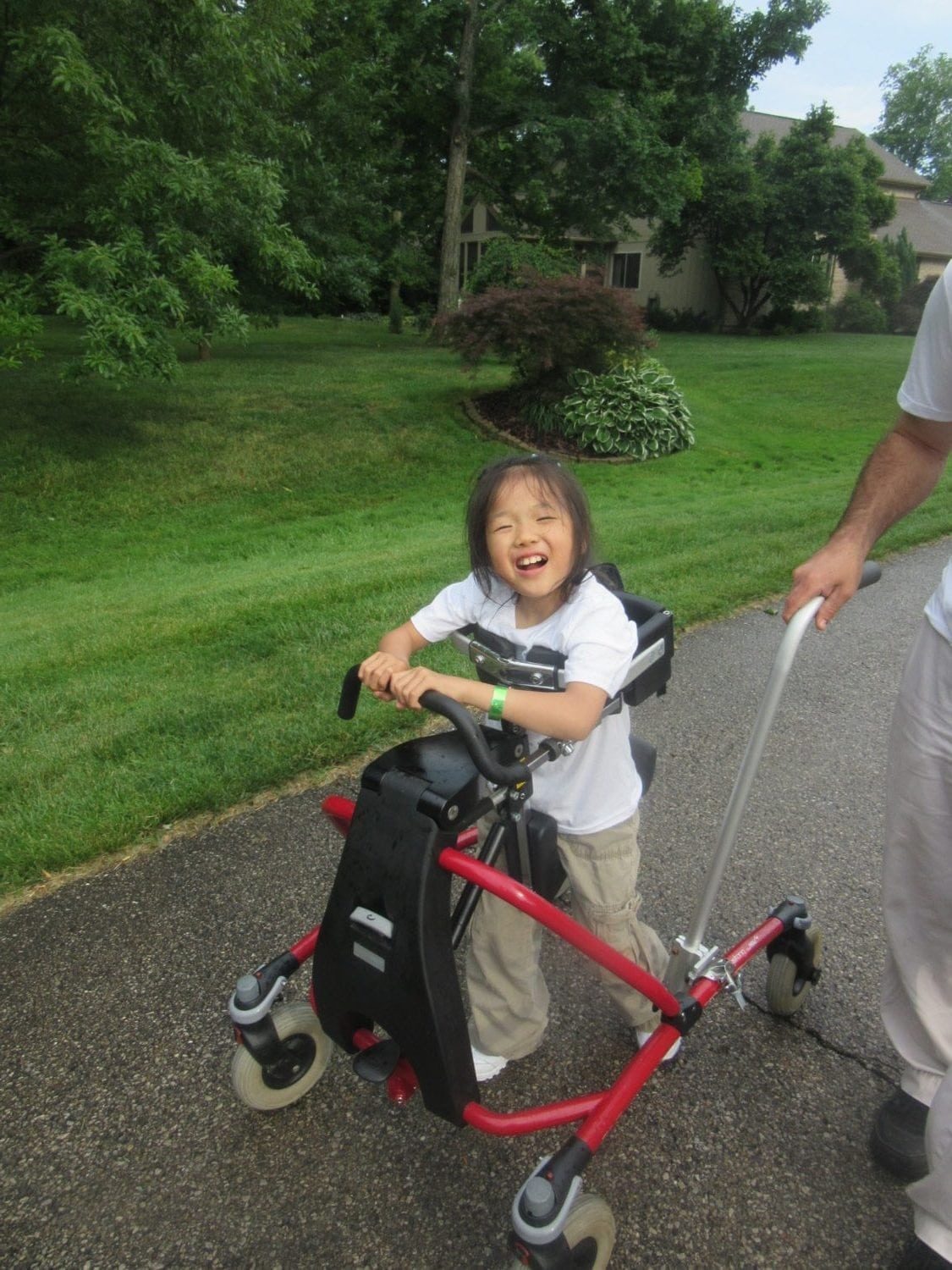
Note: The accompanying photos highlight Jade’s joyful nature and pride in copying others. She demonstrated knowing what to do with the iron and feeling so proud, even with a turned off iron.☺️
– Wilson family